
06/01/2012
"Studies of Ancient Egyptian Footwear.Technological Aspects. Part XIV" by Veldmeijer (2011)
Veldmeijer, A. J.; “Studies of Ancient Egyptian Footwear. Technological Aspects. Part XIV. Leather Eared Sandals”, Palarch’s Journal of Archaeology of Egypt/Egyptology 8(5) (2011) 1-31
Abstract:
Leather Eared Sandals, i.e. sandals with pre-straps that are cut from the sole’s leather, are a well known category of sandals in ancient Egypt, mainly because the manufacturing is depicted in scenes that decorate tombs. Based on archaeological finds, we can recognise several subcategories and types. The present paper, as part of the Ancient Egyptian Footwear Project’s publication series, presents the technological details of this category of leather sandals. As usual in this series of papers, other topics are discussed in passing.
30/12/2011
"Non-Destructive Characterisation and Dating of Historic Parchment Using Near Infrared Spectroscopy" by Možir et al (2011)
Možir, A.; Strlič, M.; De
Bruin, G.; Trafela, T.; Kralj Cigić, I.; Kolar, J.; Deselnicu, V.; "Non-Destructive Characterisation and Dating of Historic Parchment Using Near Infrared Spectroscopy", International Conference on non-destructive investigations and microanalysis for the diagnostics and conservation of cultural and environmental heritage (ART 2011), 13-15 April 2011, Florence, Italy
Abstract:
Parchment is a complex natural material made from animal skin, which has been used as a writing support and for bookbinding. Due to the historic value of objects made of parchment, understanding of their degradation and their conservation is of high importance to archives, libraries and museums. It was recently shown that lipid content in parchment may have an important influence on collagen degradation, probably via autoxidation. For parchment, a direct link between lipid content and degradation has, however, still not been demonstrated. The goal of this research presented here was to introduce NIR spectroscopy as a new non-destructive spectroscopic method of characterization of proteinaceous historic materials and to examine the relations between lipid content and degradation of parchment, measuring shrinkage temperature.
25/12/2011
"The Bourdichon Nativity: A masterpiece of light and colour" by Burgio et al (2009)
Burgio, L.; Clark, R. J. H.; Hark, R.;
"The Bourdichon Nativity: A Masterpiece of light and colour", V&A
Conservation Journal 58 (2009) 36-37
URL
URL

16/12/2011
"Microstructural, chemical and isotopic evidence for the origin of late neolithic leather recovered from an ice field in the Swiss Alps" by Spangenberg et al (2010)
Spangenberg, J. E.; Ferrer, M.; Tschudin, P.; Volken, M.; Hafner, A.; “Microstructural, chemical and isotopic evidence for the origin of late neolithic leather recovered from an ice field in the Swiss Alps”, Journal of Archaeological Science 37(8) (2010) 1851-1865
Abstract:
Archaeological leather samples recovered from the ice field at the Schnidejoch Pass (altitude 2756 m amsl) in the western Swiss Alps were studied using optical, chemical molecular and isotopic (δ13C and δ15N of the bulk leather, and compound-specific δ13C analyses of the organic-solvent extracted fatty acids) methods to obtain insight into the origin of the leather and ancient tanning procedures. For comparison, leathers from modern native animals in alpine environment (red deer, goat, sheep, chamois, and calf/cow) were analyzed using the same approach. Optical and electron microscopically comparisons of Schnidejoch and modern leathers showed that the gross structure (pattern of collagen fibrils and intra-fibrils material) of archaeological leather had survived essentially intact for five millennia. The SEM studies of the hairs from the most important archaeological find, a Neolithic leather legging, show a wave structure of the hair cuticle, which is a diagnostic feature for goatskins. The variations of the bulk δ13C and δ15N values, and δ13C values of the main fatty acids are within the range expected for pre-industrial temperate C3 environment. The archaeological leather samples contain a mixture of indigenous (from the animal) and exogenous plant/animal lipids. An important amount of waxy n-alkanes, n-alkan-1-ols and phytosterols (β-sitosterol, sitostanol) in all samples, and abundant biomarker of conifers (nonacosan-10-ol) in the legging leathers clearly indicate that the Neolithic people were active in a subalpine coniferous forest, and that they used an aqueous extract of diverse plant material for tanning leather.
09/12/2011
"3D Micro-XRF for Cultural Heritage Objects: New Analysis Strategies for the Investigation of the Dead Sea Scrolls” by Mantouvalou et al (2011)
Mantouvalou, I.; Wolff, T.; Hahn, O.; Rabin, I.; Lühl, L.; Pagels, M.; Malzer, W.; Kanngiesser, B.; “3D Micro-XRF for Cultural Heritage Objects: New Analysis Strategies for the Investigation of the Dead Sea Scrolls”, Analytical Chemistry 83 (16) (2011) 6308–6315
DOI: 10.1021/ac2011262 (restricted access)
Abstract:
A combination of 3D micro X-ray fluorescence spectroscopy (3D micro-XRF) and micro-XRF was utilized for the investigation of a small collection of highly heterogeneous, partly degraded Dead Sea Scroll parchment samples from known excavation sites. The quantitative combination of the two techniques proves to be suitable for the identification of reliable marker elements which may be used for classification and provenance studies. With 3D micro-XRF, the three-dimensional nature, i.e. the depth-resolved elemental composition as well as density variations, of the samples was investigated and bromine could be identified as a suitable marker element. It is shown through a comparison of quantitative and semi quantitative values for the bromine content derived using both techniques that, for elements which are homogeneously distributed in the sample matrix, quantification with micro-XRF using a one-layer model is feasible. Thus, the possibility for routine provenance studies using portable micro-XRF instrumentation on a vast amount of samples, even on site, is obtained through this work.
02/12/2011
"Conservation of an 18th century targe: stabilization and visual reintegration" by Skogstad (2010)
Hilde Skogstad, "Conservation of an 18th century targe: stabilization and visual reintegration", University of Olso, Institutt for arkeologi, konservering og historie, Master student report (2010)
Introduction:
For historical leather objects which have suffered deterioration in the form of tears, splits and areas of losses, a suitable conservation treatment will often be to add some form of structural support in order to stabilize and prevent further damage. This can be done by inserting repair patches or even a full relining underneath the original material. Although a relevant approach, this form of treatment is not a straightforward one as there is a range of decisions to be made both in terms of repair material, adhesive and the practical, hands- on task of adding the new material without risking or compromising the original. Choices should be based on the condition of the object as well as take into account well known conservation issues like reversibility and minimal intervention. Even if not a first priority, aesthetic considerations will also in most cases be present in the decision making process, maybe more so when the object is historical as opposed to archaeological.
For historical leather objects which have suffered deterioration in the form of tears, splits and areas of losses, a suitable conservation treatment will often be to add some form of structural support in order to stabilize and prevent further damage. This can be done by inserting repair patches or even a full relining underneath the original material. Although a relevant approach, this form of treatment is not a straightforward one as there is a range of decisions to be made both in terms of repair material, adhesive and the practical, hands- on task of adding the new material without risking or compromising the original. Choices should be based on the condition of the object as well as take into account well known conservation issues like reversibility and minimal intervention. Even if not a first priority, aesthetic considerations will also in most cases be present in the decision making process, maybe more so when the object is historical as opposed to archaeological.
The following case study discusses the conservation of an 18th century Scottish targe from the collections at Leeds Royal Armouries, a project in which several of the above mentioned issues had to be considered in order to stabilize the object and at the same time visually reintegrate areas of damage and losses.

18/11/2011
"El influjo renascentista en las encuadernaciones de la Biblioteca Histórica de la Universidad de Salamanca" por Miguélez González (2009)
Miguélez González, Elvira Julieta; “El influjo renascentista en las encuadernaciones de la Biblioteca Histórica de la Universidad de Salamanca”, Anales de Documentación 12 (2009) 181-208
Resumen:
La encuadernación es una técnica que consiste en unir los pliegos u hojas del libro con la cubierta, formando un conjunto unitario para su mejor conservación y facilidad en el uso que nace con un fin eminentemente funcional, protegerlo contra las agresiones exteriores. Al mismo tiempo, este revestimiento del libro va a admitir una decoración u ornamentación, que generalmente está sujeta a las influencias técnicas y decorativas de cada época y que hace participar a la encuadernación en las artes decorativas. Si su objetivo fundamental es utilitario, es decir de protección y manejabilidad, su segunda función, también esencial, es la de embellecer y revalorizar su contenido. Por tanto contribuye a la elaboración de la historia del libro y, también, a través de la encuadernación se pone de manifiesto el gusto de cada época que conjuga la técnica con la belleza de las formas.
Abstract:
The last stage of the elaboration of the majority of books is the bookbinding. This one consists of uniting the sheets or leaves of the books with the cover, forming a unitary set for its better conservation and facility in the use. It appears when the book adopts its square form and is born with an eminently functional aim, to protect it against the external aggressions. At the same time, it is going to admit a decoration or ornamentation that is generally subject to the technical and decorative influences of every time. Thus then, the bookbinding has two aspects: the technique and the art; is utilitarian, is to say of protection and manageability, his second function, also essential, is to embellish it and to upgrade its content. Its study is one of the tasks that contribute to the elaboration of history book. Through her, the taste of every time is shown, aside from the global vision of an applied art, which conjugates the technique with the beauty of the forms.
11/11/2011
Encuadernaciones artísticas, exposición virtual, Biblioteca de la Universidad de Navarra, España
Encuadernaciones artísticas
Presentación:
Las encuadernaciones proporcionan el primer contacto físico y visual de los libros. Las encuadernaciones tienen una razón de utilidad y también estética, que las introduce en la historia del arte con sus estilos artísticos, y ponen de manifiesto el gusto de cada época.
Las encuadernaciones proporcionan el primer contacto físico y visual de los libros. Las encuadernaciones tienen una razón de utilidad y también estética, que las introduce en la historia del arte con sus estilos artísticos, y ponen de manifiesto el gusto de cada época.
La Biblioteca de la Universidad de Navarra ha incorporado a lo largo de su corta historia una interesante colección de libros antiguos procedentes fundamentalmente de donaciones.
El estado de conservación de los libros se acusa de forma particular en las encuadernaciones, desgastadas por el uso, rozadas inevitablemente por la madera de los anaqueles y dañadas en sucesivos traslados desde antiguo. La restauración, que no llegó a todos los libros, se debe principalmente a Garazi Valverde Bilbao, también a Sergio Robles Salgado y a Blanca Gallejones Gutiérrez.
En la exposición se ofrecen de forma sistemática ejemplares representativos de cada estilo artístico. Las mejores piezas son las góticas y platerescas, también las románticas. Cuando falta alguna muestra representativa se exponen ejemplos de la Biblioteca Nacional de España, de la Biblioteca Municipal de Madrid, de la Biblioteca de la Universidad de Valencia, de la la Biblioteca Goyeneche y de la Librería Luces de Bohemia de Zaragoza.
07/11/2011
"Encuadernaciones mudéjares" por Zamora (2008)
Zamora, María Isabel Álvaro; “Encuadernaciones mudéjares”, Artigrama 23 (2008) 445-481
PDF
Resumen:
Estudio de las encuadernaciones mudéjares de los siglos XV y XVI. En él se analizan sus características, precedentes en los talleres de encuadernación de al-Andalus y el Magreb, tipologías de cubiertas, materiales, técnicas decorativas, estética y repertorio ornamental, en las que se fusiona la tradición islámica dominante con algunos elementos propios de la encuadernación y arte occidentales.
31/10/2011
Alaska Fur ID Project
"Alaska Fur ID project (www.alaskafurid.wordpress.com) is an online resource created by Ellen Carrlee, conservator at the Alaska State Museum in Juneau, and conservation fellow Lauren Horelick (and partially funded by the FAIC Carolyn Rose Take a Chance grant) to aid in the identification of fur on both historic and Alaskan Native objects. This easily accessible fur ID website, posted in blog format, presents a wealth of diagnostic information on nearly 50 Alaskan animal species including hoofed animals, rodents, hares, canines, felines, bears, weasels, and marine mammals."
"While the Alaska Fur ID project was inspired by the Czech Furskin website (http://www.furskin.cz/), which presents diagnostic information on skin and fur together with SEM images, the Alaska Fur ID website is specifically tailored to aid those using primarily transmitted or polarized light microscopy to identify the sources of individual animal hairs."
(Source: AIC blog, full post can be read here)
28/10/2011
"Anglo-Saxon inscribed sheaths from Aachen, Dublin and Trondheim" by Okasha (1992)
Okasha, Elisabeth; “Anglo-Saxon inscribed sheaths from Aachen, Dublin and Trondheim”, Medieval Archaeology 36 (1992) 59-66
PDF
Abstract:
Three Anglo-Saxon inscribed (leather) sheaths are discussed in detail, and compared with other contemporary sheaths for small angle-backed weapons. An appendix lists all known examples.
Abstract:
Three Anglo-Saxon inscribed (leather) sheaths are discussed in detail, and compared with other contemporary sheaths for small angle-backed weapons. An appendix lists all known examples.
18/10/2011

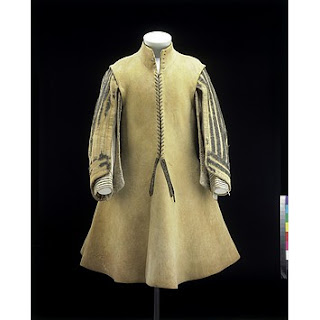
23/09/2011
"A Great Lakes pouch: black-dyed skin with porcupine quillwork" by Cruickshank et al (2009)
Cruickshank, P.; Daniels, V.; King, J.; “A Great Lakes pouch: black-dyed skin with porcupine quillwork”, British Museum Technical Research Bulletin 3 (2009) 63-72
PDFSummary:
A late eighteenth-century North American pouch (1937,0617.1) represents an important type of a black-dyed skin bag decorated with porcupine quillwork. The pouch was made by women of the Ojibwa or Ottawa people and was probably used in medicine ceremonies. It came to the British Museum in the mid-twentieth century and when first examined in detail in the 1970s had already deteriorated. The skin has degraded due to the presence of a black dye, although an early watercolour painting of the bag discovered in the 1990s illustrates how the bag once looked. Black dyes containing both iron and tannin are well known to increase the rate of deterioration of many organic substances and the pouch was found to contain 1.63% iron. Experiments with a series of brain-tanned skin samples stained with various iron-tannin solutions and artificially aged showed that the presence of iron accelerated the deterioration of the skin.
A conservation treatment carried out in the 1970s, which included consolidation with soluble nylon and backing with nylon net adhered with an early thermoplastic adhesive, was no longer succeeding in keeping the bag intact, and further conservation was carried out to protect the 75% of the bag that survives. As the pouch is of a rare type it was decided to infill the missing areas to make it more suitable for display. The use of adhesives was kept to a minimum and solvent-reactivated adhesives were chosen in preference to those reactivated by heat. No further chemical stabilization was attempted in this treatment.
16/09/2011
"On oxidative degradation of parchment and its non-destructive characterisation and dating" by Možir et al (2011)
Možir, A.; Strlič, M.; Trafela, T.; Kralj Cigić, I.; Kolar, J.; Deselnicu, V.; Bruin, G.; “On oxidative degradation of parchment and its non-destructive characterisation and dating”, Applied Physics A: Materials Science & Processing 104 (1) (2011) 211-217
Abstract:
Historic parchment is an extremely complex material, not only due to the various methods of production used and various past environmental histories of objects, but also due to its inhomogeneous structure. Many traditional methods of characterisation are empirical, but useful since they have gained recognition by the end-users. In this paper, we investigated the shrinkage temperature of collagen and the influence of lipids contained in parchment on the measurements. While the content of lipids does not seem to significantly affect shrinkage temperature measurements themselves, it strongly affects the decrease of shrinkage temperature of collagen during degradation, and thus its thermomechanical properties. This confirms the high importance of lipid peroxidation during degradation of parchment. While shrinkage temperature determination is a micro-destructive method, we also demonstrated that it is possible to determine this property using near infrared (NIR) spectroscopy based on partial least squares calibration. The root-mean square error of validation (RMSEV), obtained on a set of variously delipidised and degraded samples, was 7°C, so the method could be used for condition assessment or classification of historic objects. Using a set of 185 historic objects dating from 1200–1800, we also developed a method for non-destructive dating of parchment based on NIR spectroscopy using partial least squares regression (RMSEV=72 years), and successfully determined the correct age of a historic charter from the collection of Nationaal Archief, The Netherlands.
09/09/2011
Leather working by Hasluck (1904)
Preface:
This Handbook contains, in a form convenient for
everyday use, a comprehensive digest of the information on Leather Working,
scattered over more than twenty thousand columns of Work — one of the weekly journals
it is my fortune to edit — and supplies concise information on the details of
the subjects on which it treats.
In preparing for publication in book form the mass of
relevant matter contained in the volumes of Work, much had to be arranged anew,
altered, and largely re-written. From these causes the contributions of many
are so blended that the writings of individuals cannot be distinguished for acknowledgement.
Readers who may desire additional information respecting
special details of the matters dealt with in this Handbook, or instructions on
kindred subjects, should address a question to Work, so that it may be answered
in the columns of that journal.

Subscribe to:
Posts (Atom)